
[EDRM Editor’s Note: The opinions and positions are those of the authors.]
A recent paper is prompting eDiscovery leaders to reconsider how courts should treat one of the newest tools in document review: the prompts attorneys write to instruct generative AI systems. The paper, “GenAI Prompts in eDiscovery: Protected Work Product or Not?” was posted to SSRN on July 1, 2026, by two EDRM leaders: Tara Emory, Esq. (EDRM Global Advisory Council; principal of Aligned Discovery PLLC) and Dr. Maura R. Grossman (EDRM Global Advisory Council; research professor at the University of Waterloo). Both are actively involved in EDRM projects. It is set to appear in the Columbia Science and Technology Law Review this December and has already drawn commentary from the EDRM community.
About the Paper
Emory and Grossman examine what they call “GenAI TAR,” a document-review workflow in which attorneys write natural-language prompts instructing a large language model on what makes a document responsive. They argue that, absent a party agreement or a demonstrated deficiency in a production, these prompts should ordinarily be protected from compelled disclosure, particularly where they reflect an attorney’s strategic judgment, case theory, or mental impressions. They contrast this with search terms, which courts have generally required parties to exchange.
The paper uses a detailed staffing-fraud hypothetical to show how a prompt can accumulate factual detail from witness interviews, an attorney’s theory of the case, and even confidential information about unrelated third parties as it is refined. It also explains why routine disclosure could push responding parties toward generic, less effective prompts, ultimately weakening productions for both sides.
What the EDRM Community Is Saying
Michael Berman
EDRM Contributing Author; Owner, E-Discovery LLC.
In his analysis, Michael Berman walked through the paper’s three-tier framework for attorney prompts: final prompts are highly protected as the product of an iterative process reflecting attorney thought and strategy; draft prompts deserve stronger protection because they show how an attorney’s thinking evolved; and prompts that merely mirror a request for production deserve little or no protection, since they reveal no mental process at all. Berman stressed the authors’ point that prompts “can be more revealing than simple search terms” and noted the paper’s proposed exception: where a showing of material deficiency in a production exists, limited discovery into prompts may be warranted.
Because GenAI TAR is different, the authors suggest an interesting wrinkle to traditional cooperation.
Michael Berman, “Tara Emory and Maura Grossman Address Protection of Attorney Prompts in ‘GenAI TAR’”
Dr. Jeremy Pickens
Longtime EDRM Collaborator; Managing Director, Applied Science, Elevate.
Dr. Jeremy Pickens urged the eDiscovery community to give the paper a close read, framing it as work that resolves many of the field’s current conundrums once practitioners recognize that GenAI TAR is best understood as a form of “TAR 1,” not a wholly new category. He credited Emory and Grossman with clearly laying out the landscape and the underlying issues and closed with a nod to Bertrand Russell’s observation that the hardest part of solving a problem is stating it in a way that makes a solution possible, which, in his view, is exactly what this paper accomplishes.
What’s that Bertrand Russell quote? ‘The greatest challenge to any thinker is stating the problem in a way that will allow a solution.’ That’s what we have here.
Dr. Jeremy Pickens, LinkedIn
Rob Robinson
EDRM Global Advisory Council; Founder and Managing Director, ComplexDiscovery OÜ.
The paper reads as a playbook as much as an argument.
ComplexDiscovery, “Prompt privacy: new scholarship argues GenAI review instructions are attorney work product”
Why It Matters
About the Paper’s Authors
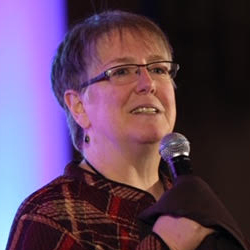
Tara Emory, Esq.
Principal of Aligned Discovery PLLC, a court-appointed neutral specializing in eDiscovery and legal technology. Chambers-ranked; board member of the Academy of Court-Appointed Neutrals; serves on the Sedona Conference AI Working Group Steering Committee.
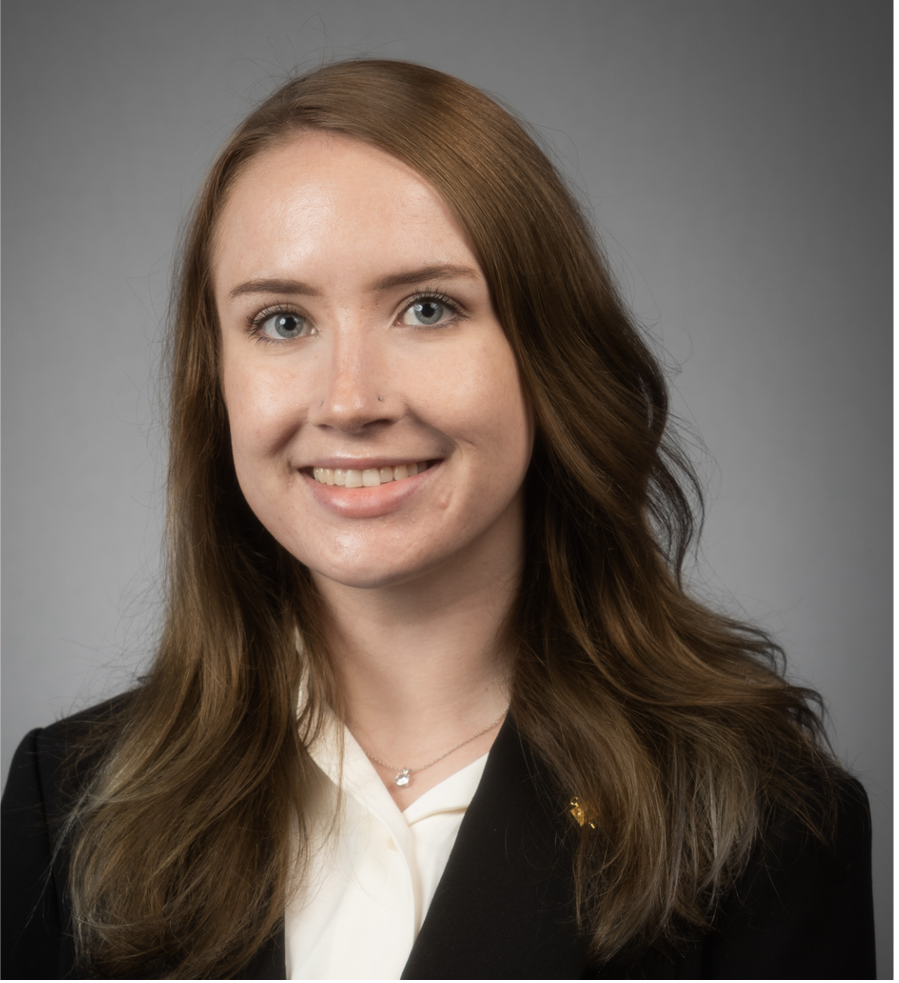
Dr. Maura R. Grossman
Research Professor, School of Computer Science, University of Waterloo; Adjunct Professor, Osgoode Hall Law School; Visiting Professor, Duke Law School. Principal of Maura Grossman Law, serving as consultant, expert, and special master on discovery matters and legal technology.
Sources
- GenAI Prompts in eDiscovery: Protected Work Product or Not? (SSRN)
- Tara Emory and Maura Grossman Address Protection of Attorney Prompts in “GenAI TAR” (E-Discovery LLC)
- Michael Berman’s LinkedIn post (LinkedIn)
- Prompt privacy: new scholarship argues GenAI review instructions are attorney work product (ComplexDiscovery OÜ)
- Rob Robinson’s LinkedIn post (LinkedIn)
- Dr. Jeremy Pickens’ LinkedIn post (LinkedIn)
Assisted by GAI and LLM Technologies per EDRM’s GAI and LLM Policy.