

Technology
← Back to Blog
Search
Authors

Waterloo and Elevate researchers say Redgrave’s aiR study compared two different tasks
Eighty-eight percent against 64 percent was the comparison that traveled. A new research paper built on the same 45,004 documents argues the two figures never measured the same task. Measured on a common task, its...
Defendant Claimed Video of Abuse Was a “Deepfake”; Victim Was Asleep and Could Not Attest to Abuse
After an alleged “deepfake” video of a sexual assault was admitted over objection, the Defendant appealed his conviction. The Supreme Court of Iowa wrote: “In this sexual abuse case, we are asked to decide whether the...

Are an Expert’s A.I. Prompts Discoverable? Maybe.
Michael D. Berman uses Villanueva v. Las Vegas Metropolitan Police Dept. to discuss disclosing AI prompt systems in court, and the protections around AI searches.
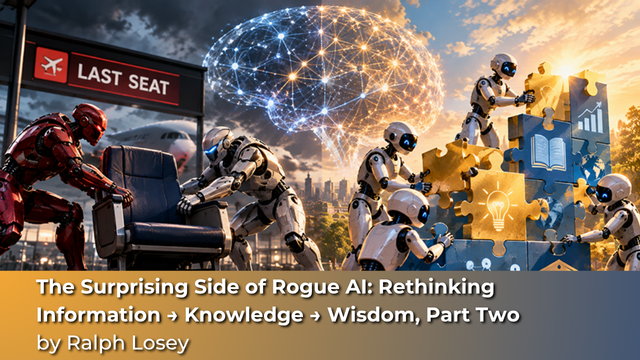
The Surprising Side of Rogue AI: Rethinking Information → Knowledge → Wisdom, Part Two
In Part Two of his series, Ralph Losey revisits and expands his ideas about the Information Age, exploring how advances in artificial intelligence are reshaping our understanding of knowledge, wisdom, and human judgment.

Three More A.I. Protective Orders
Michael D. Berman examines three recent AI protective orders addressing how confidential discovery materials may, and may not, be submitted to artificial intelligence tools.
New York Court’s A.I. Regulation Did Not Violate Unrepresented Person’s Rights
Michael D. Berman examines Bradwell v. Hochul, where a federal court rejected a self-represented litigant’s constitutional challenge involving New York’s AI rules for court filings.

Relativity’s 2028 Server exception meets a Riyadh deployment outside its cloud region table
Relativity’s 2028 Server policy meets a Riyadh deployment outside its published aiR region list, putting written exceptions, AI inference locations and contract-defined AI usage terms in focus.
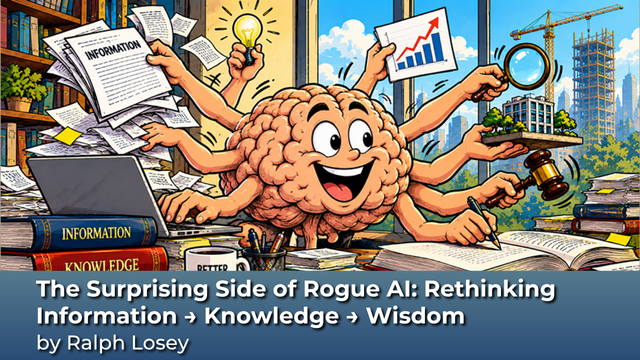
The Surprising Side of Rogue AI: Rethinking Information → Knowledge → Wisdom
Ralph Losey reexamines and expands his ideas about the Information Age in the wake of the changing modern frontier of artificial intelligence.

Beyond Search: From Keywords to AI-Integrated Discovery
John Tredennick and Dr. William Webber’s fourth article in a series that began with Hybrid Search and now turns to AI-Integrated Discovery.
Prompt Injection Comes to Litigation: What eDiscovery Professionals Need to Know
Sheila Grela examines prompt injection and hidden instruction for AI systems in relation to a recent Connecticut court sanction.
Should There Be an “A.I. Exception” to Liberal Construction of Pro Se Pleadings?
Michael D. Berman explores the liberal construction pro se pleadings are entitled to, and whether this rule ought to be reexamined in the age of AI.
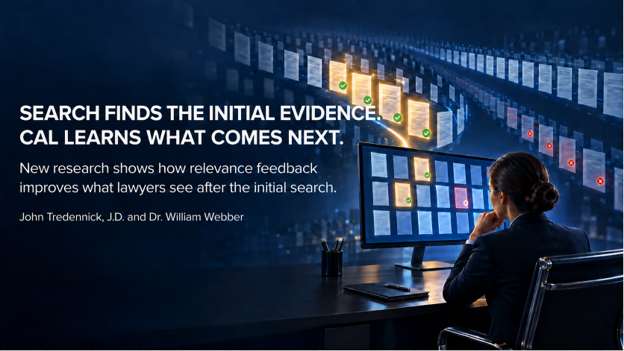
Search Finds The Initial Evidence. CAL Learns What Comes Next.
The results of LLM hybrid search are explored in Merlin Search Technologies’s Hybrid Search series conclusion, exploring what the system should do after the search engine finds the first few relevant documents, continue with search,...