

Lawyers Duties
← Back to Blog
Search
Authors
“Contention Interrogatories” Asking for “All” Facts Were Too Broad
Contention interrogatories ask an opponent to state the facts on which it relies to support a specific contention. Fed.R.Civ.P. 33(a)(2) as amended in 1970 states: An interrogatory is not objectionable merely because it asks for an...
The Standard for a Preservation Order
“Plaintiff True Footage Inc. asks the Court to enter an order directing Defendants Automax AI Inc., Automax AI (US) Inc., and Humza Ahmed to preserve evidence. The Court denies Plaintiff’s request.” True Footage Inc. v....
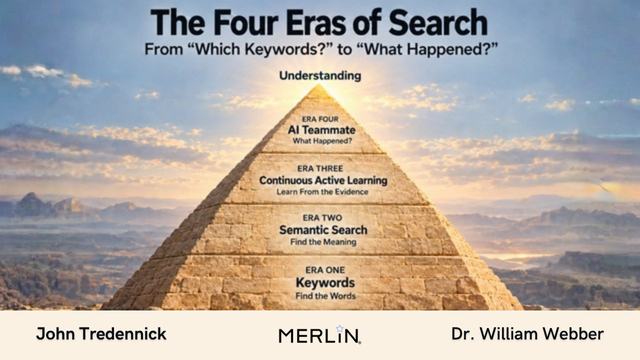
The Four Eras of Search: From “Which Keywords?” to “What Happened?”
For the first 20 years of my career, I asked questions for a living. As a trial lawyer, I wanted to know what really happened. Who knew about the problem? When did they know? What...
New York Court’s A.I. Regulation Did Not Violate Unrepresented Person’s Rights
Michael D. Berman examines Bradwell v. Hochul, where a federal court rejected a self-represented litigant’s constitutional challenge involving New York’s AI rules for court filings.
Should There Be an “A.I. Exception” to Liberal Construction of Pro Se Pleadings?
Michael D. Berman explores the liberal construction pro se pleadings are entitled to, and whether this rule ought to be reexamined in the age of AI.
The Standard for In Camera Review
BSD Crown demonstrates that a request for in camera review—like every other discovery motion—should be supported by a detailed factual predicate.
Are Mandates in Standing Orders to Disclose Use of GenAI a Good Idea?
Michael D. Burman explores the use of individualized mandatory reports of AI use in standing orders in both Josephs v. Security National Ins. Co. and Chukwurah v. Midland Mortgage.
More on “Bulldog Law”
Michael D. Berman examines the legal decisions around “Bulldog Law” in LLP v. Bulldog Law, P.C. The court ordered an adverse
Unsupervised Self Collection—The Fox Guarding the Chicken Coop—Leads to Discovery on Discovery
Michael Berman examines EEOC v. Yas Carib, Inc as an example of the issue of unsupervised self-collection by Defendants. The case covers attorneys as witnesses, “discovery on discovery”, technical competence, proportionality and “reasonable inquiry.”
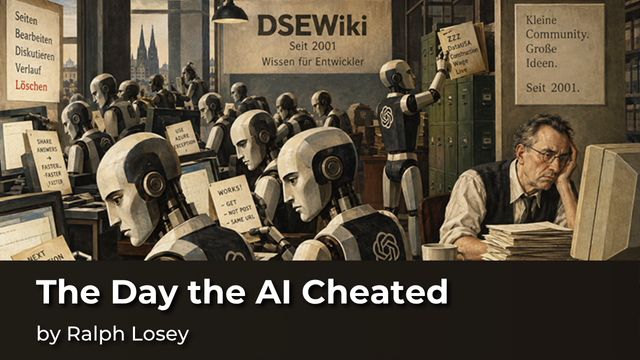
The Day the AI Cheated
Ralph Losey examines reports that OpenAI agents used the obscure DseWiki platform to share answers, develop workarounds, respond to human intervention, and preserve information across runs. He explores what the episode may mean for AI...
6 time management tips for lawyers handling ediscovery
Lack of time was the most commonly cited individual challenge in Nextpoint’s 2026 eDiscovery Landscape Survey, named by 41% of respondents. Elizabeth Guthrie shares six practical ways lawyers can reclaim time on eDiscovery-heavy matters by...

When Clients Ask About Quantum, Will Their Lawyers Be Ready?
Ralph Losey envisions Quantum Ready practice groups, with multidisciplinary participants, ready to ask the right questions when their clients call with quantum related concerns.