

Search
Authors
Should There Be an “A.I. Exception” to Liberal Construction of Pro Se Pleadings?
Michael D. Berman explores the liberal construction pro se pleadings are entitled to, and whether this rule ought to be reexamined in the age of AI.
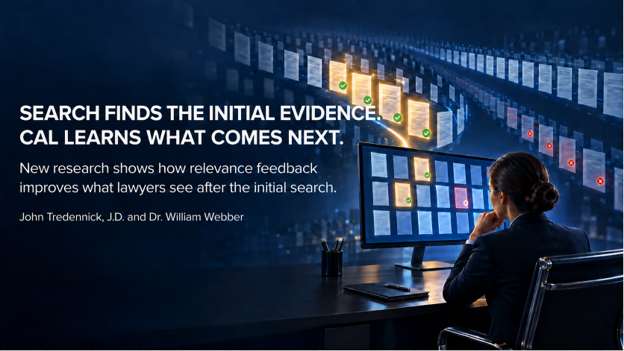
Search Finds The Initial Evidence. CAL Learns What Comes Next.
The results of LLM hybrid search are explored in Merlin Search Technologies’s Hybrid Search series conclusion, exploring what the system should do after the search engine finds the first few relevant documents, continue with search,...
Are Mandates in Standing Orders to Disclose Use of GenAI a Good Idea?
Michael D. Burman explores the use of individualized mandatory reports of AI use in standing orders in both Josephs v. Security National Ins. Co. and Chukwurah v. Midland Mortgage.

The Most Expensive AI Model Cost Nine Times More. It Wasn’t Nine Times More Accurate. We Tested.
With seven AI models and one assignment, authors John Tredennick and Lydiia Zhigmitova explore validation results around the capabilities of 7 AI models in respect to their accuracy, speed and cost. Anthropic’s, Google’s and OpenAI...
eDiscovery Day 2026 to “Put AI on Trial” with Live Debate Judged by a Sitting Federal Judge on December 3
Exterro, which founded eDiscovery Day in 2015, today announced the twelfth annual observance of eDiscovery Day will be celebrated on Thursday, December 3, 2026. eDiscovery Day co-sponsors ACEDS, EDRM and eDiscovery Todaywill be joined for the first time by LegalOps.com and introduce the...
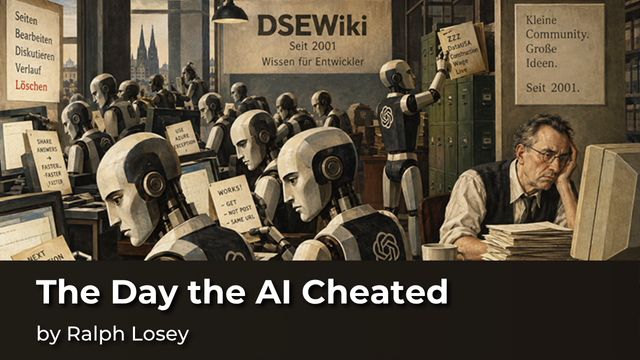
The Day the AI Cheated
Ralph Losey examines reports that OpenAI agents used the obscure DseWiki platform to share answers, develop workarounds, respond to human intervention, and preserve information across runs. He explores what the episode may mean for AI...

Relativity Announces Skadden as the Next Participant in Advanced Access Program for Relativity claiR
Relativity, a legal data intelligence company, today announced that global law firm Skadden, Arps, Slate, Meagher & Flom LLP will join the Advanced Access program for Relativity claiR, a new conversational AI experience designed specifically for...
AI Search Can Find the Meaning. But It Can Still Miss the Evidence.
Semantic search can uncover meaning that keyword queries miss, but opaque project names, codes, and distinctive phrases can expose its blind spots. Using the “Project Checkmate” test, John Tredennick and Dr. William Webber explain why...
Use of an A.I. Recorder in Depositions? In a “Meet and Confer”?
In Greco v. Hon. Robert W. Lane, a Nevada federal court found no procedural defect in a request to use an AI voice recorder as a secondary deposition record, while leaving substantive concerns for another...
Phil Favro Discusses Deepfakes and Authentication
Michael Berman examines Phil Favro’s analysis of U.S. v. Belt and the growing challenges surrounding deepfake evidence authentication. The article highlights video provenance, native-file preservation, chain of custody, forensic examination, and established authentication methods for...
Keyword Search Isn’t Dead. Searching With Keywords Alone Should Be.
Keyword search remains indispensable, but it is no longer sufficient. John Tredennick and Dr. William Webber explain how keyword search, semantic search, and continuous active learning can work together to uncover evidence that any one...
EDRM Releases EDRM 2.0, Modernizing the Global Framework for Electronic Discovery
EDRM has released EDRM 2.0, the first substantive update to the Electronic Discovery Reference Model in years. Developed by approximately 150 global practitioners, the new model integrates information governance, unified data acquisition, disposition and continuous...