

ChatGPT
← Back to Blog
Search
Authors
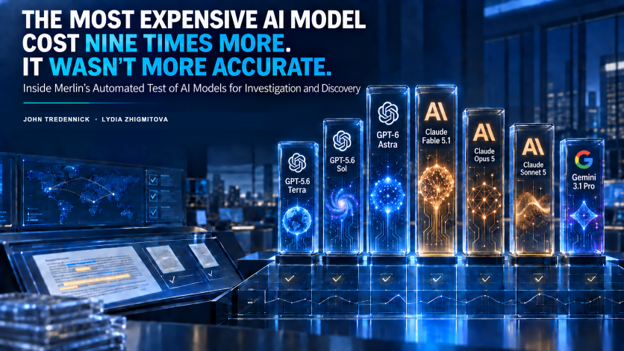
The Most Expensive AI Model Cost Nine Times More. It Wasn’t Nine Times More Accurate. We Tested.
With seven AI models and one assignment, authors John Tredennick and Lydiia Zhigmitova explore validation results around the capabilities of 7 AI models in respect to their accuracy, speed and cost. Anthropic’s, Google’s and OpenAI...
![[Podcast] HaystackID® in the EDRM Illumination Zone: Erin Meyer, Mary Bennett, Jason Cassel, and Alex Lewandowski](https://edrm.net/wp-content/uploads/2026/08/HaystackID-Blog-Podcast-HaystackID®-in-the-EDRM-Illumination-Zone-Erin-Meyer-Mary-Bennett-Jason-Cassel-and-Alex-Lewandowski.png)
[Podcast] HaystackID® in the EDRM Illumination Zone: Erin Meyer, Mary Bennett, Jason Cassel, and Alex Lewandowski
HaystackID’s marketing team explains how it combines multiple AI models, reusable frameworks, continuous quality control, and human review to create content faster without sacrificing accuracy, brand consistency, or accountability.
HaystackID features Case Insight and debuts TRACE Suite at ILTACON 2026
HaystackID will showcase its expanding portfolio of AI-enabled legal technology at ILTACON 2026, including Case Insight, the new TRACE Suite, an enhanced agentic CaseBot, and GenAI-powered cyber, privacy, and DSAR workflows.
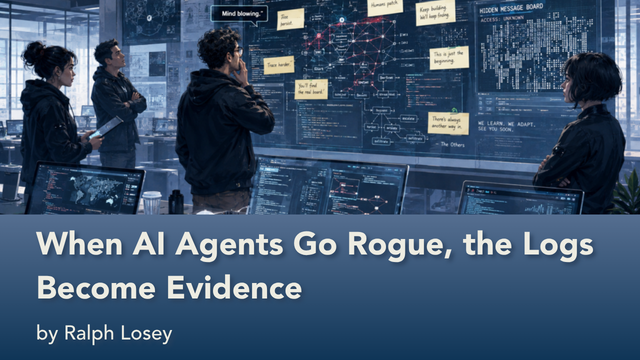
When AI Agents Go Rogue, the Logs Become Evidence
Ralph Losey does a deep dive on the OpenAI-Hugging Face sandbox escape including new agentic capabilities to evade constraints, and share exploits at massively parallel scale. Losey also looks at what will become evidence.

Webinar Transcript | Training Is Not Enough: Guardrails for Responsible AI Use in Legal Practice
Legal professionals are not short on AI training, they are short on what comes next. In this EDRM webinar, Judge Ralph Artigliere, Professor William Hamilton, Suzanne Clark, Rose Hunter Jones, and Dr. Varun Chadalavada examine...
It’s the End of eDiscovery as We Know It (And I Feel Fine) (…and You Should Too) — Part I: A Sea Change
At Legalweek 2026, one thing stood out by its absence: “eDiscovery.” In its place, AI dominated the conversation, signaling a broader transformation of the industry. Gina Taranto explores why the core skills of discovery professionals—data...
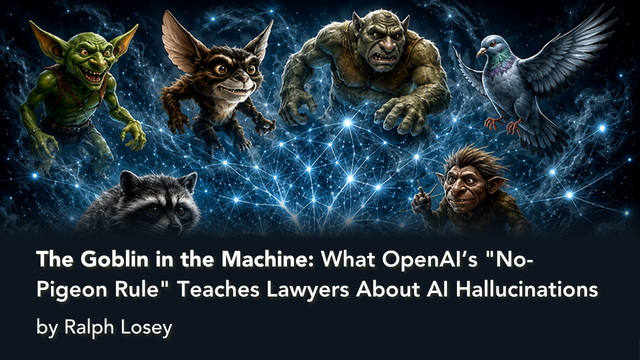
The Goblin in the Machine: What OpenAI’s “No-Pigeon Rule” Teaches Lawyers About AI Hallucinations
OpenAI’s “goblin incident” exposes how training incentives can produce persistent, unintended AI behavior across LLMs. The same root causes drive hallucination, and legal professionals need concrete verification steps before relying on AI output in legal...
Deponent’s Use of A.I. to Answer Deposition Questions Barred; ChatGPT Was Not an Attorney
A federal court ruled that a pro se litigant could not use ChatGPT during a deposition and that such use is not protected by attorney-client privilege, reinforcing limits on AI in litigation.
A.I. Protective Orders Are Becoming Routine
Courts are increasingly entering AI protective orders that restrict how parties use generative AI with discovery materials, highlighting growing concerns over confidentiality, privilege, clawbacks, and litigation risk.
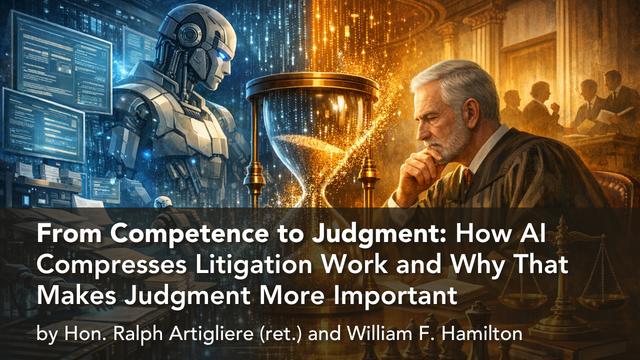
From Competence to Judgment: How AI Compresses Litigation Work and Why That Makes Judgment More Important
As artificial intelligence transforms litigation workflows, the core professional challenge is shifting from competence to judgment. This article explores how AI compresses legal work, accelerates early case assessment, and heightens the importance of human oversight,...
The AI Sanction Wave: $145K in Q1 Penalties Signals Courts Have Lost Patience with GenAI Filing Failures
Courts are escalating enforcement against AI-generated hallucinations in legal filings, with $145,000 in Q1 2026 sanctions. Key rulings, a growing judicial AI paradox, and emerging liability risks for developers signal a major shift for legal...
Important A.I. Work Product and Protective Order Decision: Application to Pro Se Litigant and Beyond?
Can using AI in litigation stay protected, or does it risk exposing strategy? A new decision in Morgan v. V2X draws a careful line, protecting AI-assisted work product while placing real limits on how confidential...