

Author: Hon. Ralph Artigliere (Ret.)
← Back to Blog
Search
Authors
Passing the Controls: The Art of Legal Judgment, Mentorship, and the Next Generation in the Age of AI
What happens to legal judgment when AI can perform, at surface level, the very tasks junior lawyers have always used to build skill? Retired judge Ralph Artigliere and Wake Forest-bound Zara Russell tackle that question...
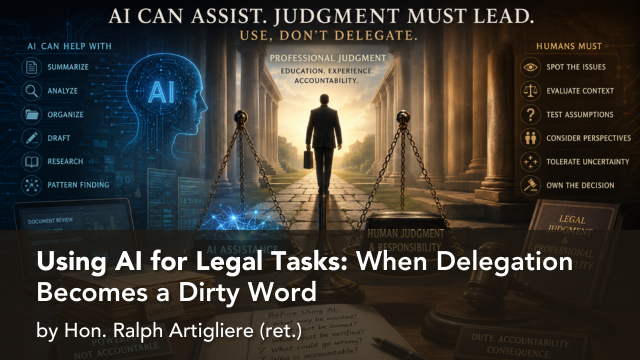
Using AI for Legal Tasks: When Delegation Becomes a Dirty Word
Judge Ralph Artigliere explores the growing tension between AI assistance and professional responsibility in legal practice. This article examines over-delegation risks, automation bias, eDiscovery implications, and the need for real-time human oversight in AI-assisted legal...
From Training to Execution: Embedded Safeguards for Responsible AI Use in Legal Practice
AI is already transforming legal practice, but training alone isn’t enough. This article explores how embedded safeguards—built directly into workflows—help lawyers and judges apply their knowledge reliably under pressure, reducing risk and reinforcing professional responsibility...
From Competence to Judgment: How AI Compresses Litigation Work and Why That Makes Judgment More Important
As artificial intelligence transforms litigation workflows, the core professional challenge is shifting from competence to judgment. This article explores how AI compresses legal work, accelerates early case assessment, and heightens the importance of human oversight,...
Effective Advocacy 101 in the Age of eDiscovery and AI: A Guide for Lawyers and Their Clients
Hon. Ralph Artigliere (ret.) outlines how effective advocacy fundamentals remain essential in an AI-driven legal world, where credibility is tested faster than ever.
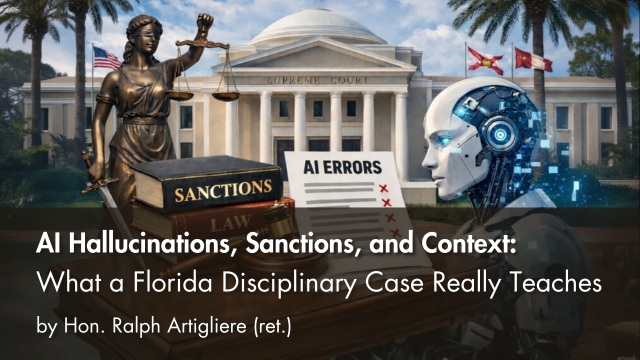
AI Hallucinations, Sanctions, and Context: What a Florida Disciplinary Case Really Teaches
The Florida Bar v. Neusom illustrates how AI errors can support, but not alone justify, disciplinary action. Context and culpability matter more than outcome when it comes to responsible AI use in legal practice.
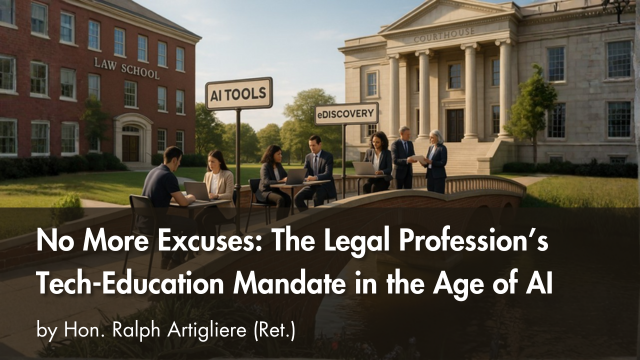
No More Excuses: The Legal Profession’s Tech-Education Mandate in the Age of AI
The age of AI demands more than compliance—it demands mastery. Judge Ralph Artigliere highlights Professor Bill Hamilton’s transformative approach to legal technology education, showing that ethical excellence and digital literacy are one and the same.
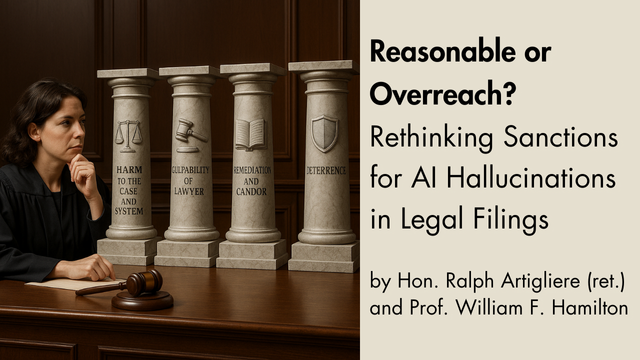
Reasonable or Overreach? Rethinking Sanctions for AI Hallucinations in Legal Filings
When AI-generated hallucinations appear in court filings, how should judges respond? A new four-pillar framework proposes principled, proportional sanctions to protect the justice system without overreach.
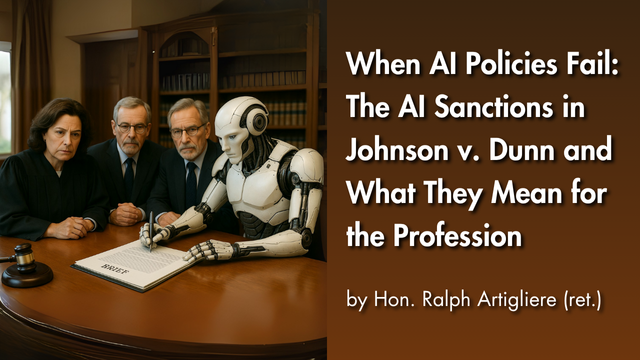
When AI Policies Fail: The AI Sanctions in Johnson v. Dunn and What They Mean for the Profession
The Johnson v. Dunn case marks a turning point in judicial tolerance for AI citation errors. Despite clear firm policies and experienced counsel, the court imposed severe sanctions, signaling that only individual verification, not institutional...
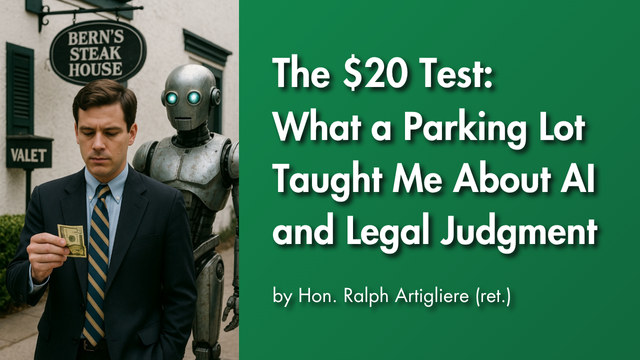
The $20 Test: What a Parking Lot Taught Me About AI and Legal Judgment
When a young lawyer found a $20 bill, he faced a simple yet profound ethical choice. Decades later, Hon. Judge Ralph Artigliere (ret) compares his human decision to AI’s analysis, revealing why empathy, intuition, and...

Avoiding the Third Rail of Legal AI: Don’t Let the Machine Think for You
As AI becomes more powerful, legal professionals face growing pressure to rely on it for core tasks. But true responsibility means using these tools wisely, without surrendering judgment, accountability, or the human craft of legal...

The Future Is Now: Why Trial Lawyers and Judges Should Embrace Generative AI Now and How to Do it Safely and Productively
This article offers a clear framework for trial lawyers and judges to adopt generative AI responsibly, emphasizing practical use cases, ethical safeguards, and the importance of human oversight in legal decision-making.