

AI Ethics
← Back to Blog
Search
Authors
Well-Reasoned “Hallucination” Analysis
A federal court decision in Brownfield v. Cherokee Co. School Dist. clarifies that failing to verify AI-generated citations can trigger Rule 11 sanctions, even for pro se litigants.
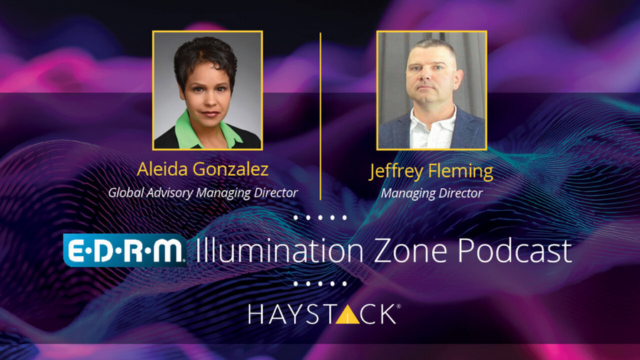
HaystackID® in the EDRM Illumination Zone: Jeffrey Fleming and Aleida Gonzalez
In this EDRM Illumination Zone podcast, HaystackID’s Jeffrey Fleming and Aleida Gonzalez explain why AI governance must move beyond policy documents to defensible testing, documentation, and operational compliance. From EU AI Act mandates to U.S....
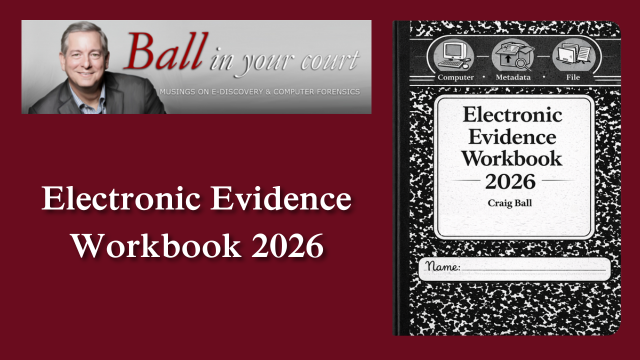
Electronic Evidence Workbook 2026
The 2026 edition of Craig Ball’s Electronic Evidence Workbook spans 638 revised pages and embraces LLMs, AI-assisted editing, cloud realities, and hands-on forensic training, including a new macOS imaging exercise, preparing law students for modern...

A.I. Documents Deemed Not Privileged
A federal judge held that AI-generated documents created by a defendant and later shared with counsel are not protected by attorney-client privilege or work product doctrine. The ruling highlights growing risks around AI confidentiality, discoverability...

Illumination Zone: Episode 223 | Jeffrey Fleming and Aleida Gonzalez of HaystackID sit down with Mary Mack and Holley Robinson
Jeffrey Fleming and Aleida Gonzalez, Managing Directors for EDRM Trusted Partner, HaystackID sit down with Mary Mack and Holley Robinson. In this episode, Jeff and Aleida recount their journeys to cyber and eDiscovery as well...

From One-Eyed Kings to Collective Sight in Enterprise AI
Enterprise AI isn’t failing from lack of tools, but from lack of visibility. This article explores how governance, training, and workflow redesign move AI from pilots to scale.

Moltbook and the Rise of AI-Agent Networks: An Enterprise Governance Wake-Up Call
Moltbook’s AI-only social network reveals how autonomous agents expand enterprise risk, redefining governance, security, and discovery obligations.
Facial Recognition Technology in Maryland Criminal Cases
Maryland courts and statutes set key precedents for the admissibility, disclosure, and limits of facial recognition technology in criminal proceedings, principles with relevance far beyond state lines.

EDRM Releases an Open Call for Contributors for Key Projects
EDRM issues an open call for contributors to four cornerstone projects tackling AI ethics, discovery workflows, ESI protocols, and testimony evidence, inviting collaboration across the legal tech community.

From Principles to Practice: Embedding Human Rights in AI Governance
Human rights are becoming enforceable design principles in AI governance. From the UN’s Digital Compact to Europe’s binding AI Convention, cybersecurity and eDiscovery teams must align tools and policies with new global norms for oversight,...
Effective Advocacy 101 in the Age of eDiscovery and AI: A Guide for Lawyers and Their Clients
Hon. Ralph Artigliere (ret.) outlines how effective advocacy fundamentals remain essential in an AI-driven legal world, where credibility is tested faster than ever.
Review: How “The Leery Lawyer’s Guide to AI and LLMs in Trial Practice” Made Me a More Confident Legal Tech User
This review of The Leery Lawyer’s Guide to AI and LLMs in Trial Practice highlights how Craig Ball empowers legal professionals to confidently integrate AI into daily litigation tasks.