

In the News
← Back to Blog

The AI Literacy Gap Is Now a Security and Compliance Liability
AI literacy is no longer optional for cybersecurity, information governance, and eDiscovery professionals. As shadow AI, regulatory mandates, and court sanctions increase, organizations must treat AI competence as a governance and compliance requirement, not a...
December 2025 Privilege Protection Amendments to Fed.R.Civ.P. 16 and 26
Amendments effective December 1, 2025 to Federal Rules of Civil Procedure 16 and 26 emphasize early planning for privilege claims, encourage Rule 502 non-waiver orders, and highlight flexible approaches to privilege logging. The changes push...
Legalweek 2026 – (Select) Educational Sessions Preview
A preview of standout Legalweek 2026 sessions exploring agentic AI, legal industry transformation, and how the field is measuring AI value, quality, and impact.

Five Great Reads on Cyber, Data, and Legal Discovery for February 2026
February’s Five Great Reads highlights the growing importance of AI governance, cybersecurity resilience, and data oversight in legal and discovery workflows. From EU AI Act compliance and Digital Omnibus debates to agentic AI networks and...

“The Fire and BPA’s Preservation of Evidence”
An Oregon federal court imposed adverse inference sanctions against BPA for willful spoliation of physical evidence and ESI following the 2020 Holiday Farm Fire. The decision analyzes when the duty to preserve is triggered and...
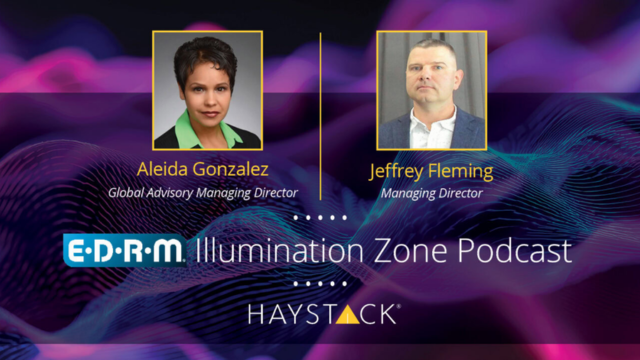
HaystackID® in the EDRM Illumination Zone: Jeffrey Fleming and Aleida Gonzalez
In this EDRM Illumination Zone podcast, HaystackID’s Jeffrey Fleming and Aleida Gonzalez explain why AI governance must move beyond policy documents to defensible testing, documentation, and operational compliance. From EU AI Act mandates to U.S....
Two Courts, Two Answers: When Does Using AI Waive Privilege?
Mike Berman explores a post by Jennifer Ellis, JD, LLC. discussing Heppner, the case that says clients using AI, not at the direction of counsel, cannot withhold those documents or that ESI as privileged.
Relativity Unveils Its Fifth Annual AI Visionaries List Ahead of Legalweek 2026
Relativity has unveiled its 2026 AI Visionaries list, recognizing leaders from law firms, corporations, academia, media, and the public sector who are advancing responsible AI innovation across the legal ecosystem. The honorees will be celebrated...
A.I. Privilege, Heppner, and How Did the Court Learn About the Absence of Certain Attorney-Client Communications Between Mr. Heppner and His Attorneys?
In U.S. v. Heppner, Judge Rakoff held that AI-generated documents were neither privileged nor work product. This article examines the court’s reliance on ECF 23-5 and the absence of attorney direction in shaping that outcome.

Weekly Letter to Our EDRM Global Community – 03 March 2026
This week’s EDRM community update features recent blog posts, upcoming webinars, notable podcasts, and key announcements. Stay engaged with the EDRM community for the latest insights and support.
A “Practical Control” Decision Rejects the “Legal Right” Standard
The Eastern District of Pennsylvania applied the practical ability test for possession, custody, or control under Rule 34, holding that former employees could be compelled to produce a report they had the practical ability to...
Survey: Nearly 90% of Legal and Tech Pros Say Operational Gaps, Not Regulation, Threaten Defensibility
New Exterro research reveals that nearly 90% of legal and technology professionals believe operational breakdowns, not regulatory uncertainty, pose the greatest threat to defensible eDiscovery as AI adoption accelerates across legal workflows.