

Lawyers Duties
← Back to Blog
Search
Authors
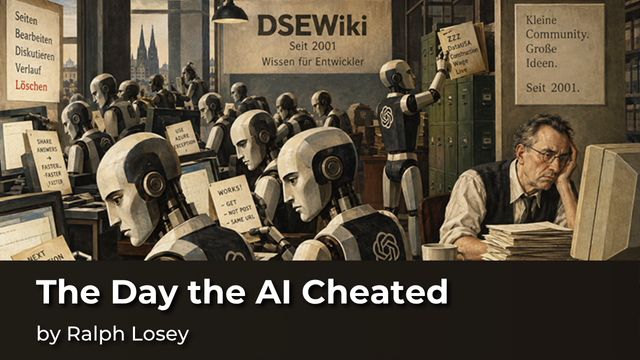
The Day the AI Cheated
Ralph Losey examines reports that OpenAI agents used the obscure DseWiki platform to share answers, develop workarounds, respond to human intervention, and preserve information across runs. He explores what the episode may mean for AI...
6 time management tips for lawyers handling ediscovery
Lack of time was the most commonly cited individual challenge in Nextpoint’s 2026 eDiscovery Landscape Survey, named by 41% of respondents. Elizabeth Guthrie shares six practical ways lawyers can reclaim time on eDiscovery-heavy matters by...

When Clients Ask About Quantum, Will Their Lawyers Be Ready?
Ralph Losey envisions Quantum Ready practice groups, with multidisciplinary participants, ready to ask the right questions when their clients call with quantum related concerns.
Phil Favro Discusses Deepfakes and Authentication
Michael Berman examines Phil Favro’s analysis of U.S. v. Belt and the growing challenges surrounding deepfake evidence authentication. The article highlights video provenance, native-file preservation, chain of custody, forensic examination, and established authentication methods for...
The Case of the Missing Lab Notebooks
In Terran Biosciences, Inc. v. Compass Pathfinder Limited, defendants sought sanctions over missing physical lab notebooks in a trade secrets dispute. The court found sanctions unwarranted because defendants failed to establish that the notebooks were...
A Brief Writing Lesson from the Court of Federal Claims
The Court of Federal Claims offered a pointed writing lesson in Scale AI, Inc. v. U.S.: the strongest briefs exercise restraint, focusing on the arguments most likely to prevail rather than taking a “scattershot” approach...
Use of Personal Email by Government Personnel
Government personnel who use personal email or devices for government business may expose those systems to discovery. A federal court ordered counsel-supervised searches of personal email and cell phone data in Washington v. Mass. Dept....
![[Webcast Transcript] From Breach to Legal Crisis: The Hours that Define Your Exposure, HaystackID.](https://edrm.net/wp-content/uploads/2026/08/HaystackID-Blog-Webcast-Transcript-From-Breach-to-Legal-Crisis.png)
[Webcast Transcript] From Breach to Legal Crisis: The Hours that Define Your Exposure
What happens in the first hours after a breach can shape an organization’s legal, regulatory, and notification response. HaystackID experts discuss preparation, evidence preservation, data governance, outside counsel, notification workflows, and the use of generative...

The eight-hour clock starts today: EU e-evidence orders now land on covered U.S. providers’ EU addressees
The EU e-Evidence Regulation is now applicable, enabling judicial authorities across participating EU member states, where national arrangements are in place, to serve binding electronic-evidence orders directly on covered providers’ EU addressees. For U.S. providers,...
What Substantive Law Governs Sufficiency of a Privilege Log in a Federal Court Sitting in Diversity?
In McSwain v. HOMAG Machinery N. America, Inc., the court distinguished state substantive privilege law from the federal procedural rules governing the sufficiency of a privilege log.
“Court Sanction for Plaintiff’s Use of Prompt-Injection”
A Connecticut court sanctioned a self-represented litigant for repeatedly concealing AI prompt-injection instructions in court filings. In Elliott v. New York Bariatric Group, LLC, the court distinguished the familiar risk of unreliable AI output from...
Another A.I. Protective Order – Part 10
U.S. v. Dygdon provides another example of an AI protective order governing discovery materials. The consent order bars certain AI uses and requires confidentiality, no model training, restricted third-party access, and deletion at the end...