

Technology
← Back to Blog
Search
Authors

The Most Expensive AI Model Cost Nine Times More. It Wasn’t Nine Times More Accurate. We Tested.
With seven AI models and one assignment, authors John Tredennick and Lydiia Zhigmitova explore validation results around the capabilities of 7 AI models in respect to their accuracy, speed and cost. Anthropic’s, Google’s and OpenAI...
Unsupervised Self Collection—The Fox Guarding the Chicken Coop—Leads to Discovery on Discovery
Michael Berman examines EEOC v. Yas Carib, Inc as an example of the issue of unsupervised self-collection by Defendants. The case covers attorneys as witnesses, “discovery on discovery”, technical competence, proportionality and “reasonable inquiry.”
eDiscovery Day 2026 to “Put AI on Trial” with Live Debate Judged by a Sitting Federal Judge on December 3
Exterro, which founded eDiscovery Day in 2015, today announced the twelfth annual observance of eDiscovery Day will be celebrated on Thursday, December 3, 2026. eDiscovery Day co-sponsors ACEDS, EDRM and eDiscovery Todaywill be joined for the first time by LegalOps.com and introduce the...
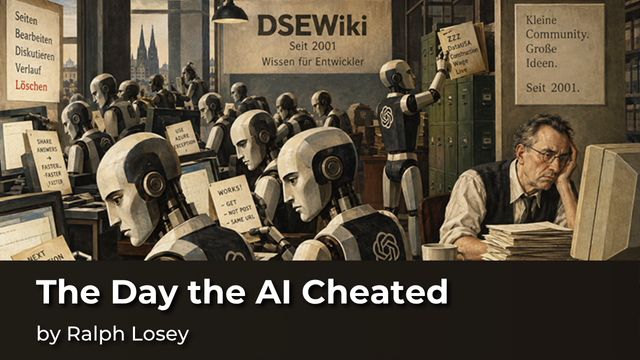
The Day the AI Cheated
Ralph Losey examines reports that OpenAI agents used the obscure DseWiki platform to share answers, develop workarounds, respond to human intervention, and preserve information across runs. He explores what the episode may mean for AI...
AI Search Can Find the Meaning. But It Can Still Miss the Evidence.
Semantic search can uncover meaning that keyword queries miss, but opaque project names, codes, and distinctive phrases can expose its blind spots. Using the “Project Checkmate” test, John Tredennick and Dr. William Webber explain why...
6 time management tips for lawyers handling ediscovery
Lack of time was the most commonly cited individual challenge in Nextpoint’s 2026 eDiscovery Landscape Survey, named by 41% of respondents. Elizabeth Guthrie shares six practical ways lawyers can reclaim time on eDiscovery-heavy matters by...

When Clients Ask About Quantum, Will Their Lawyers Be Ready?
Ralph Losey envisions Quantum Ready practice groups, with multidisciplinary participants, ready to ask the right questions when their clients call with quantum related concerns.
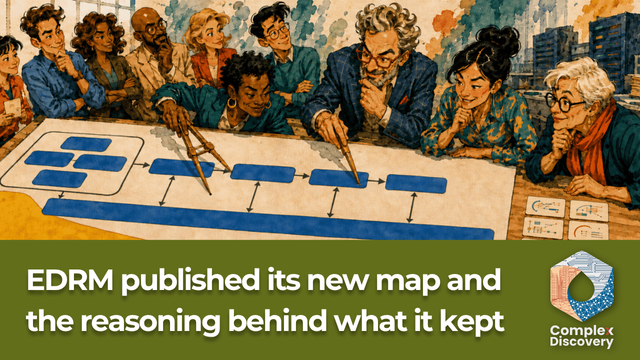
EDRM published its new map and the reasoning behind what it kept
ComplexDiscovery analyzes the final EDRM 2.0 model and the reasoning behind it, examining four structural shifts, trustee responses to public comments, and the practical implications for eDiscovery, information governance, security, and legal operations professionals.
Use of an A.I. Recorder in Depositions? In a “Meet and Confer”?
In Greco v. Hon. Robert W. Lane, a Nevada federal court found no procedural defect in a request to use an AI voice recorder as a secondary deposition record, while leaving substantive concerns for another...
Working with clients to collect ediscovery data: 4 strategic tips
Client collection is as much a communication challenge as a technical one. Elizabeth Guthrie of Nextpoint shares four practical strategies for setting expectations, identifying data sources, managing self-collection, and addressing privacy and security concerns.
Phil Favro Discusses Deepfakes and Authentication
Michael Berman examines Phil Favro’s analysis of U.S. v. Belt and the growing challenges surrounding deepfake evidence authentication. The article highlights video provenance, native-file preservation, chain of custody, forensic examination, and established authentication methods for...
Keyword Search Isn’t Dead. Searching With Keywords Alone Should Be.
Keyword search remains indispensable, but it is no longer sufficient. John Tredennick and Dr. William Webber explain how keyword search, semantic search, and continuous active learning can work together to uncover evidence that any one...